

A plumbing symptom rarely points to a single cause, and the house it shows up in changes the likely answer. University Park makes a good example. The village began as the planned community of Park Forest South in the late 1960s, so much of its housing is ranches, split levels and townhomes from the 1970s and 1980s, built with copper supply lines joined by solder that was legal until the federal lead ban took effect in 1986. Since 2018, homes on the Aqua Illinois system have received treated Kankakee River water instead of well water, and everything sits on dense clay that holds spring rain against foundations. Low pressure in one of those homes means something different than it does in a new build across the county line.
Sorting that out is the everyday work of residential plumbing in University Park, and Vertical Plumbing, based just south in Monee, handles it with licensed, insured technicians and electronic leak detection that finds hidden water before walls get opened. The same crew covers repiping, water heaters, sump pumps and drain camera work, so a symptom that crosses from supply to drain does not require a second company. Booking runs weekdays from 6 a.m. to 4 p.m., and a short note through their online contact form describing what you are seeing helps the technician arrive with the right equipment.
Pressure That Fades
Where the pressure drops tells you more than how much it drops. One faucet running weak while the rest of the house is fine usually means a clogged aerator or cartridge, often packed with scale or debris stirred up after hydrant flushing. Weak flow everywhere points upstream. In older copper homes, it can also mean a pinhole leak bleeding pressure somewhere unseen.
- Unscrew the aerator on the weak fixture and check for grit. If flow returns, the problem was local.
- Confirm the main shutoff is fully open, since valves get half closed during past repairs and forgotten.
- Turn off every fixture and watch the water meter. A spinning leak indicator with nothing running means water is escaping somewhere in the line.
Homeowners curious about what the supply pipe between the street and the house is made of can look at the Illinois EPA’s lead service line information, which explains the statewide inventory every community water supplier now has to maintain.
Water That Changes Color
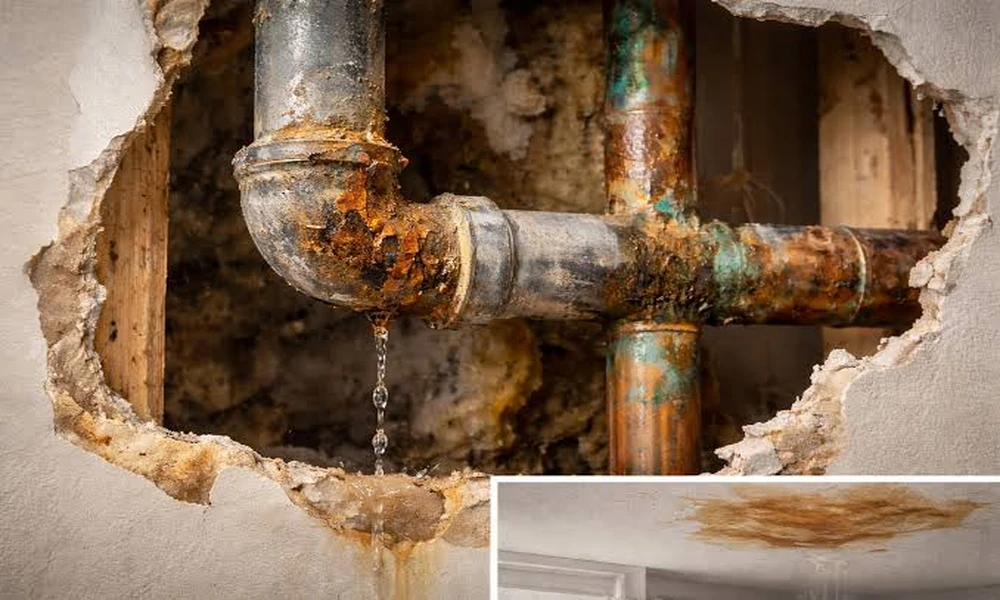
Brown or yellow water across the whole house for a few hours after utility work is usually sediment from the main and clears with flushing. Color that appears only on the hot side points to the water heater, typically a tank corroding from the inside or an anode rod worn down to bare wire. Blue green stains in sinks and tubs suggest copper pipe corrosion, which tends to rise when water chemistry shifts.
That last point carries local weight. The EPA’s account of the University Park drinking water response covers the period when elevated lead turned up in village homes. The utility later tied the problem to a treatment change that let lead solder in older interior plumbing leach into the water, rather than to its mains.
- Run cold water only and note whether discoloration persists.
- Run hot water only and compare.
- For any home built before 1986, request a lead test through the water utility rather than relying on color, because lead is invisible.
Drains That Slow and Pipes That Gurgle
These two symptoms often travel together, and pairing them is the fastest way to narrow the cause. A single slow sink with no noise is almost always a local clog of hair, soap or grease in the trap. Gurgling from one fixture while it drains usually means the vent above it is restricted, and roof vents in this area can partially close with frost in a hard January. When the toilet gurgles as the washing machine empties, or the lowest floor drain backs up, the main line is the suspect. Clay soil and mature parkway trees make root intrusion at old joints a common finding.
- Test whether the slowdown affects one fixture, one bathroom, or the whole house.
- Listen at other fixtures while a large volume drains, such as a tub or washer.
- If more than one fixture is involved, schedule a camera inspection before choosing between rooter cutting and hydro jetting, since the video shows whether pipe is cracked or simply clogged.
Damp Spots With No Obvious Source
Moisture has three common origins, and each needs a different fix. In basement homes, a damp band along the lower wall after heavy rain is groundwater pressing through clay, a sump and drainage issue rather than a plumbing leak. Beads of water along cold pipes during humid July weeks are condensation, not a leak. On slab townhomes, a warm patch of floor or the sound of running water when nothing is on suggests a leak in a line under the concrete.
- Dry the spot and watch whether it returns with rain, with humidity, or constantly.
- Run the meter test described above to rule a supply leak in or out.
- Pour water into the sump pit during spring and confirm the pump starts and discharges well away from the foundation.
Water Heater Trouble
Tank heaters in hard Midwest water collect sediment, which causes popping or rumbling as water boils beneath the layer. Hot water that runs out early can mean a broken dip tube or, in electric models, a failed lower element. A slow leak from the base of a tank past its tenth year is generally a replacement, not a repair. Tankless units throw error codes and fluctuate in temperature when scale coats the heat exchanger, and most manufacturers call for periodic descaling.
- Note the age from the serial number on the data plate.
- Listen for rumbling during a heating cycle.
- Check the floor and the relief valve discharge pipe for moisture.
Reading Symptoms Together
The most useful habit is noticing combinations. Rusty hot water plus rumbling points firmly to the tank. Gurgling plus a damp floor drain points to the main line. Low pressure plus a spinning meter points to a hidden leak. A single symptom invites guesses, while two or three together usually narrow the cause to one place in the system, which saves money on the visit and keeps a repair from treating the wrong pipe.
