

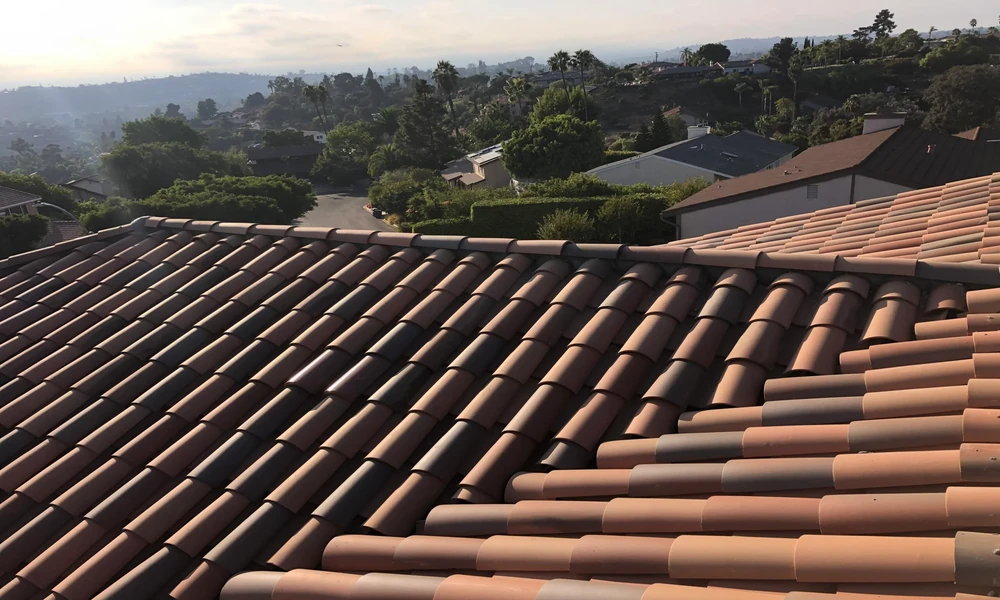
Twenty-five miles separate the bluffs above Del Mar from the hills around El Cajon, and on a September afternoon the temperature gap between them can top thirty degrees. One house wakes up wrapped in damp gray fog. The other sits under a sun that turns attic air into an oven by noon. Both roofs are in the same county, often built in the same decade with the same materials, yet they wear out in completely different ways.
That gap is the first thing worth understanding about San Diego roof repair, since a fix that holds on a beach cottage can fail early on a ranch house in Santee. The team behind mckayroofingsolar.com has been working on roofs across the county since 1981, and its roofing, electrical and general building classifications sit under a single CSLB license, so the same crew can handle a roof and the solar array bolted to it.
So it makes sense to follow the weather from the shoreline inland, because the damage changes along the way.
Salt and Fog Along the Shoreline
From Oceanside down through La Jolla, Point Loma and Imperial Beach, the enemy is moisture that never quite leaves. The marine layer rolls in most mornings from late spring into early summer, and the air it carries is loaded with salt. Roofs here rarely fail from heat. They fail at the metal.
Galvanized flashing, nail heads, vent caps and the valley metal where two roof planes meet all corrode slowly in salt air. Rust streaks running down from a pipe boot are usually the first visible sign. Once the metal thins, water slips under the shingle or tile at exactly those points, and a homeowner finds a stain on a bedroom ceiling that seems to come from nowhere.
North-facing slopes also stay damp longer, so algae and moss take hold against shingles and wood shake. Good coastal repairs swap corroded parts for stainless or heavily coated metal instead of smearing sealant over rust, because caulk on a salt-eaten flashing buys a season at best.
The Mesas Where Wind Pulls Things Loose
Move a few miles inland to Clairemont, Mira Mesa, La Mesa and the canyons around Mission Valley, and the main stressor shifts to wind. Santa Ana events push hot, dry air out of the northeast, mostly in fall and winter, with gusts that can pass 50 or 60 mph along exposed ridges and canyon rims.
Wind damage is easy to miss because the roof often looks fine from the street. After a strong wind event, it pays to look for
- ridge caps that have shifted or lost their grip
- shingle tabs that are creased or folded back, a sign the seal strip has let go
- concrete or clay tiles that have slid down a few inches or cracked at the nose
- granules or tile fragments collecting in gutters and downspouts
A lifted tab may lie back down and look normal, but once the adhesive bond breaks it will flap in every future gust. Repairs here usually mean hand sealing tabs, resetting or replacing slipped tile with proper fasteners, and making sure ridge work is mechanically attached rather than relying on old mortar alone.
East County and the Long Bake
Out in El Cajon, Santee, Lakeside, Spring Valley and Ramona, heat runs the show. The National Weather Service notes that dry easterly winds can push eastern San Diego into the 90s and beyond, and the inland valleys log far more of those days than the coast ever does.
Constant UV and daily heat cycling dry out asphalt shingles, which shed granules and curl at the edges years ahead of schedule. Sealants around skylights, chimneys and plumbing vents harden and crack. Tile roofs bring a twist that surprises many owners. The tile itself can last half a century, but the underlayment beneath it often gives up after twenty to twenty-five years of baking, and that hidden layer is what actually keeps water out.
That is why heat-zone repairs frequently involve a lift and relay, where sound tiles come off, fresh underlayment goes down, and the same tiles go back on. It costs far less than a full tear-off and can add decades. Better attic ventilation helps too, since trapped heat cooks the deck from below.
Flat Roofs and Water With Nowhere to Go
Plenty of midcentury homes, condos and room additions across the county have low-slope or flat sections, and those follow their own rules. Water sits instead of shedding. Small dips create ponding that hunts for every weak seam.
Typical trouble spots include blistered cap sheets, split seams where the roof meets a parapet wall, clogged scuppers and drains, and old coatings that have chalked away to nothing. Repairs range from patching blisters and resealing seams to recoating the whole surface with a reflective elastomeric layer. The deciding question is whether the insulation or deck under the membrane is already wet. If it is, a patch on top only seals the problem in.
When the Rain Finally Shows Up
San Diego averages around ten inches of rain a year, and most of it lands in a handful of storms between November and March. That rhythm is sneaky. A roof can crack, slip and dry out through eight rainless months without a single drip, then reveal everything during one heavy storm.
Early fall is the smartest window for repair work. Roofers are less booked and small fixes stay small. Once a leak has soaked insulation and drywall through a few storms, the bill grows to cover interior repairs and sometimes mold cleanup as well.
Panels Overhead Change the Conversation
Rooftop solar is everywhere in the county now, and it complicates repair work in a few ways. Every mounting bracket is a penetration that depends on flashing to stay dry. Panels shade and hide the roof surface, so damage underneath can go unnoticed for years, and pigeons and rodents love nesting in the gap below an array.
Fixing a leak under panels often means detaching modules, repairing the roof and then resetting the system, which mixes electrical work with roofing. When two separate companies handle those trades, a leak can turn into an argument about who caused it. Anyone planning solar on an older roof is better off settling repairs first.
Reading a Roof by Where It Lives
Across all of this, one pattern holds. A roof’s location tells you where to look first. Coastal homes need attention at the metal, mesa and canyon homes need a check after every serious wind, inland homes need an eye on underlayment and attic heat, and flat sections anywhere need their drainage and seams watched.
A good repair answers why the failure happened in that particular spot, not just where the water came through. When the fix matches the climate the house actually sits in, it lasts. When it doesn’t, the same ceiling stain tends to come back the next winter, usually a little larger than before.
