

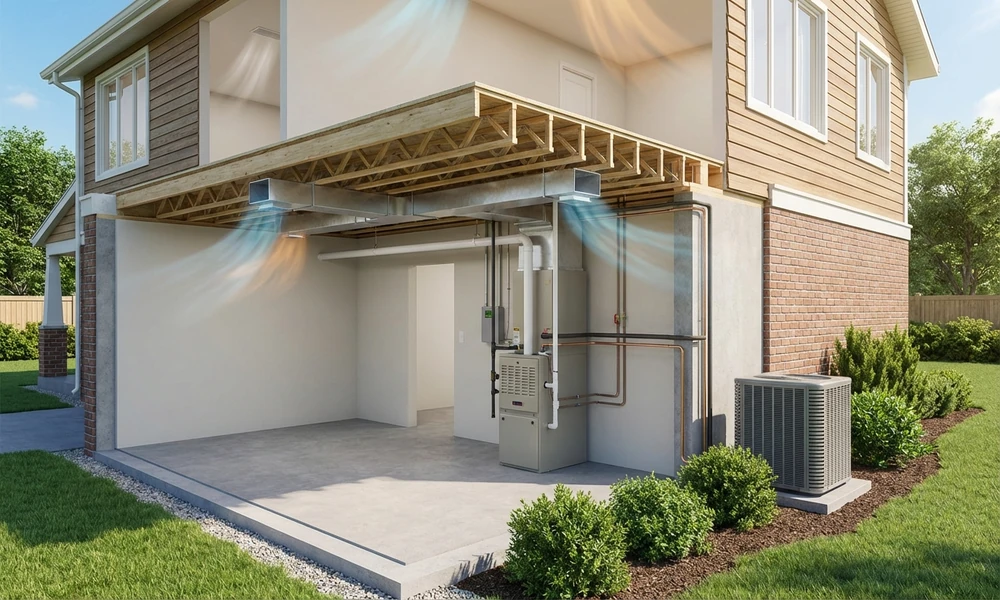
Some winters barely deserve the name. You get weeks of chilly mornings and comfortable afternoons, then a cold snap that drops into the teens and maybe an ice storm that coats every branch on the hillside. Heating a home through that kind of season is awkward. A system built for the coldest night is oversized for most of the year, and one built for mild weather struggles when the real cold arrives.
That uneven pattern is why more homeowners are asking about dual fuel heating. The idea is simple: pair an electric heat pump with a gas furnace and let each one handle the weather it is best at. The heat pump carries the mild days, and the furnace takes over when temperatures fall hard.
Knoxacandheating.com, an hvac company in Hot Springs with more than 25 years of residential and commercial heating and cooling work, installs heat pumps alongside traditional furnace and AC systems, so this pairing is a natural fit for the area. The ENERGY STAR guide to air source heat pumps describes the same arrangement. It pairs a heat pump with an existing gas or oil furnace, and it’s often suggested when a home has a fairly new furnace but an aging central air conditioner.
Why a Heat Pump Shines on Mild Days
A heat pump doesn’t burn anything. It moves heat from outdoor air into the house, the same way an air conditioner moves heat out in summer, just in reverse. Because it’s transferring heat rather than creating it, it can deliver several units of heat for every unit of electricity it uses.
That efficiency is highest when the outdoor air is only moderately cool. At 45 or 50 degrees, there’s plenty of heat to pull from the air, and the heat pump runs smoothly and cheaply. On those days, which make up most of a southern winter, a furnace burning gas is often the more expensive way to stay warm.
The same outdoor unit also cools the house all summer. So a dual fuel setup isn’t an extra machine sitting idle half the year. It replaces the air conditioner you would have needed anyway.
Where the Furnace Earns Its Keep
As temperatures drop, a heat pump has to work harder to find heat outside. Its output falls just as the house needs more warmth. Older heat pumps handle this by switching on electric resistance strips, which work like a giant toaster and can send utility bills climbing.
A gas furnace doesn’t care how cold it is outside. Its flame produces the same heat at 15 degrees as it does at 45. It also pushes out noticeably warmer air from the vents, which many people find more comfortable on a bitter morning than the gentler warmth of a heat pump.
In a dual fuel system, the furnace replaces those electric strips as the backup. Instead of paying for resistance heat during a cold snap, the house switches over to gas.
How the Switchover Actually Works
A compatible thermostat, or the system’s own control board, decides which heat source runs. The process usually goes like this:
- An installer sets a switchover temperature, often called the balance point, based on the home’s heat loss, the equipment’s capacity and local utility rates.
- An outdoor temperature sensor tells the system how cold it is outside.
- Above the balance point, the heat pump handles heating on its own.
- Below it, the heat pump shuts down and the furnace takes over.
- During defrost cycles, when the heat pump briefly reverses to melt frost off its outdoor coil, the furnace can fire to keep cold air from blowing into the house.
The two systems don’t run at the same time to produce heat, because the furnace sits upstream of the indoor coil. Running both together would push hot furnace air across the heat pump coil and create pressure problems.
Picking the Right Balance Point
The balance point is where dual fuel either pays off or doesn’t. There are really two ways to think about it.
The comfort balance point
This is the outdoor temperature where the heat pump can no longer keep up with the home’s heat loss. It depends on insulation, air leakage, window quality and how well the equipment was sized. A tight, well-insulated house lets the heat pump work down to colder temperatures before it needs help.
The economic balance point
This is where running gas becomes cheaper than running electricity. It shifts with local electric and natural gas rates, and with the efficiency ratings of both machines. If electricity is relatively cheap and gas is expensive, the heat pump should run longer. If gas is a bargain, the switchover can happen sooner.
The best setting usually lands somewhere between these two numbers, and it’s worth adjusting when utility rates change.
When Dual Fuel Makes the Most Sense
Dual fuel is a strong fit when the furnace still has years of life left but the air conditioner is failing. Replacing just the outdoor unit with a heat pump and adding the right controls can turn an ordinary system into a hybrid without tearing out working equipment.
It also suits homes that already have a gas line and a vented furnace in place. Homes without natural gas have less reason to consider it, since adding a gas service just for backup heat rarely adds up. In those houses, a cold climate heat pump with modest electric backup is often the simpler path.
Sizing matters either way. ENERGY STAR recommends that contractors use a Manual J load calculation to size heat pumps instead of matching the old unit’s tonnage. An oversized heat pump short cycles in summer and handles humidity poorly, which is a real problem in a muggy climate.
A Note on Safety
Keeping a gas furnace in the mix means keeping combustion safety in mind. The furnace should be inspected before each heating season, including its heat exchanger, venting and flame. The U.S. Consumer Product Safety Commission recommends carbon monoxide alarms on every level of the home and outside sleeping areas, ideally interconnected so one alarm triggers them all.
For a climate that spends most of the winter in mild territory and only occasionally swings into real cold, splitting the work between two heat sources is a practical answer. The heat pump keeps everyday bills down, the furnace stands ready for the worst nights, and the home stays comfortable either way.
