

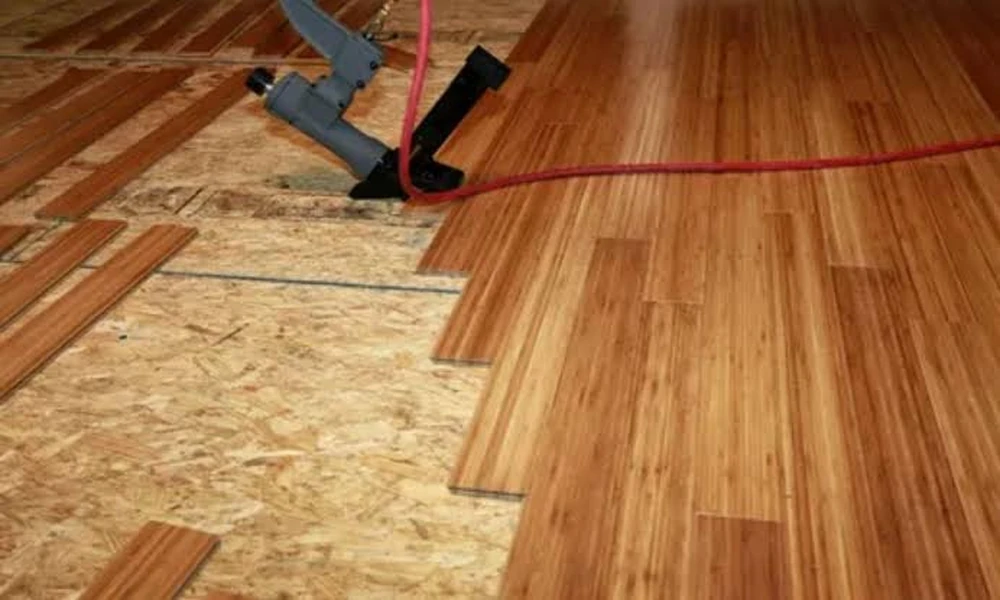
A decade ago, laminate carried a slight stigma. It was the budget pick, the compromise you accepted when hardwood was out of reach. That reputation has aged badly, because the category has changed almost beyond recognition. Today, floating laminate and its cousins are frequently the first choice of renovators who could afford anything, and the reasons behind that shift say a lot about how people renovate now.
What “floating” actually means
The name confuses people, so let us clear it up. A floating floor is not glued or nailed to the subfloor. Instead, the planks click together edge to edge and rest on top of an underlayment, held in place by their own interlocking connection and weight. The whole floor moves as a single sheet, expanding and contracting with humidity without being fixed down.
That engineering detail is the source of nearly every advantage that follows. Because the planks lock to each other rather than to the floor beneath, installation becomes dramatically simpler, and the range of surfaces you can install over expands. Modern floating laminate floors click together with a precision that early versions never had, which is a big part of why the format won people over.
Installation speed changed the math
The first driver of the trend is time. A floating floor can go down in a fraction of the time a glued or nailed floor requires. There is no adhesive to spread and wait on, no nailing into a subfloor, no long cure times before the room is usable. A motivated homeowner can transform a room over a weekend, and a professional crew can move through a house at remarkable speed.
That speed reshapes the whole project. Less labor means lower installation cost, which shifts the budget toward better-looking planks. Faster completion means less disruption to daily life, a factor that weighs heavily on anyone renovating a home they still live in. When the installation itself stops being a barrier, the floor becomes accessible to a much wider group of people.
The durability leap
Here is where the old stigma really falls apart. Contemporary laminate wears a tough, printed and sealed surface layer engineered to resist scratches, dents, and fading. The wear ratings on quality laminate rival or exceed what many people expect from the floors they are trying to imitate. For households with pets, kids, and heavy traffic, that resilience is not a small thing.
The related rise of rigid vinyl, particularly SPC with its stone-based core, pushed durability even further, especially around water. This matters because it broke laminate free of its biggest historical weakness. Where older laminate feared moisture, the newer generation of floating floors includes options rated for kitchens, entrances, and even bathrooms. The category grew up precisely where it used to be vulnerable.
Looks caught up with the ambition
None of this would matter if the floors still looked fake. They largely do not anymore. High-resolution printing, embossed textures that align with the printed grain, and beveled edges that mimic real plank seams have closed most of the visual gap. From standing height, a good floating floor reads convincingly as wood or stone.
Brands like Pergo built their name on this category, and the broader market followed with a flood of realistic finishes. The result is that a renovator can now get the look they want, in the durability class they need, at a price that leaves room in the budget for the rest of the project. That combination, appearance plus toughness plus value, is exactly what drove the format from afterthought to default.
Where floating floors still ask for care
No trend deserves blind enthusiasm, so here is the honest caveat. Floating floors need a flat, clean subfloor, because they rest on it rather than bonding to it. Significant dips or bumps telegraph through and can stress the click joints over time. They also need expansion gaps at the walls, since the whole floor moves as one piece with humidity. Skip that gap and the floor can buckle.
The right underlayment matters too, both for comfort underfoot and for managing moisture from below, especially over concrete. These are not difficult requirements, but they are non-negotiable. A floating floor installed over a poorly prepared surface can develop the very problems the format is supposed to avoid.
The comfort and quiet nobody expected
Beyond cost and looks, floating floors brought two benefits that rarely make the sales pitch but matter enormously in daily life: comfort and sound. Because these floors rest on an underlayment rather than being bonded to the subfloor, that cushioning layer softens each step. The result is a surface that feels warmer and more forgiving underfoot than tile or nailed hardwood, particularly in rooms where people stand for long stretches.
Sound is the other quiet win. The right underlayment dampens the hollow click that early floating floors were mocked for, and it muffles the transmission of footsteps to rooms below. In multi-level homes and especially in condos, that acoustic control is not a luxury, it is often a building requirement. A properly specified underlayment turns a potential complaint into a non-issue.
These factors help explain why the category kept spreading even among people who could afford anything. A floor that installs fast, resists damage, looks convincing, and also feels good and stays quiet covers nearly every practical concern at once. The underlayment choice becomes a real decision in its own right, because it governs comfort, sound, and moisture protection all together. Skimping there undercuts the very advantages that make the format appealing, which is why experienced installers treat it as part of the floor, not an optional extra.
Why the trend has staying power
Some renovation trends are fashion and fade. This one is structural. Floating floors solved real problems: cost, installation time, disruption, and increasingly moisture, without forcing homeowners to sacrifice looks. That is not a fad, it is a genuine improvement in the value equation, and improvements like that tend to stick.
If you are planning a project and still picture laminate as the cheap compromise of years past, it is worth looking again. The category that earned that reputation barely exists anymore. In its place is a family of floors that quietly became the smart default for a very good set of reasons.
If there is a single takeaway, it is to judge the category by what it is now rather than by its reputation from a decade ago. The floors that earned laminate its old stigma have largely been replaced by a generation engineered to solve the very weaknesses people still remember. For a renovator weighing options today, dismissing floating floors on the strength of an outdated impression means overlooking one of the strongest value choices on the market. Look again, and look at the current products.
