

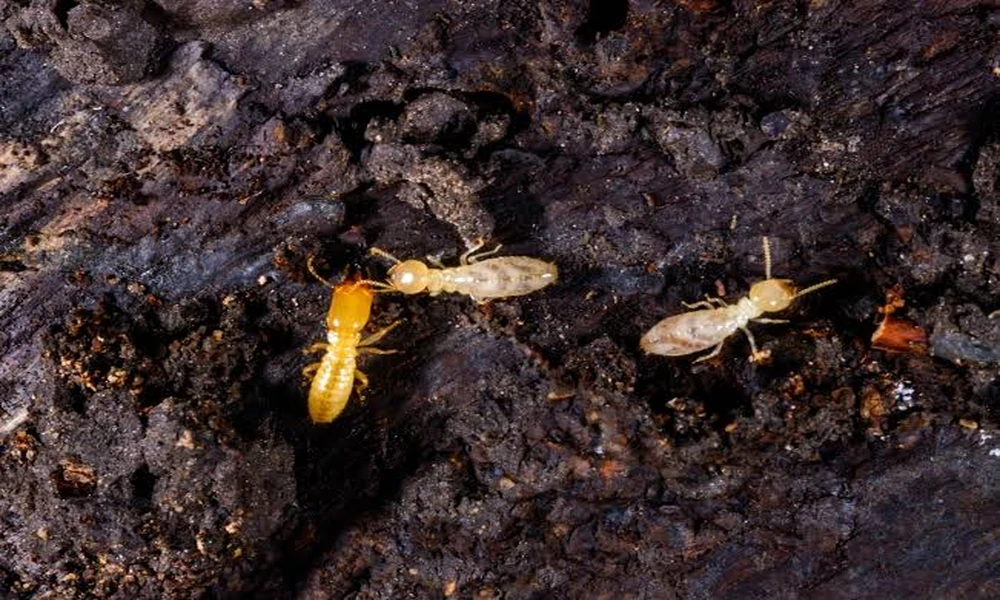
Most homes in Clermont are built on a concrete slab poured at ground level, with no basement and no crawl space under the living area. A slab can feel like a solid barrier against insects. Many owners assume subterranean termites cannot get through it. Owners comparing Clermont termite control service are often surprised that termites reach the wood in a slab house as readily as they do in any other home.
Subterranean termites do not eat through concrete. They use the openings a slab already has and move through them from the soil to the wood above. A slab can block termites only while it stays intact. Few slabs stay that way for the life of a house.
How a Slab Loses Its Seal
The Florida Department of Agriculture notes that small hairline cracks are normal in most slabs, while larger settlement cracks can give subterranean termites a way in. A soil treatment under the slab depends on the concrete staying whole. Once the slab cracks or is cut into, that protection can weaken.
Clermont’s sandy ridge soils shift with the wet and dry seasons, and the ground under a slab can move over the years. Settlement cracks open as the soil moves. A crack too thin to see can still be wide enough for a termite worker to pass through, since the insect needs only a continuous path from damp soil to wood.
The Openings a Slab Already Has
A poured slab is rarely one unbroken sheet of concrete. Builders leave expansion joints between sections. Plumbing and electrical lines pass up through the slab at fixed points. An expansion joint can run the full depth of the slab, so a termite that finds one has a route from the soil to the wood plate on top. These openings can let termites in without any mud tube showing on the outside wall.
The area beneath a tub or shower can be difficult to access, leaving plumbing spaces there easy to overlook during an inspection. Termites that come up through an interior penetration reach the base of a wall from inside the house. They can then move into the framing, the baseboards, and the door casings while the outside of the house looks untouched. Slab-home damage is often found during a remodel for this reason.
Why the Treated Soil Does Not Last
New Clermont homes get a soil termiticide treatment before the slab is poured. Treatment in that area can prevent termites from reaching the structure while leaving the colony below the ground intact. The chemicals only deny the termites a path inside. The treated band can be broken over the years by ground movement, by a plumbing repair that cuts through the slab, by an added patio or room, or by irrigation moving through the soil. Saela Pest Control can check whether the treated zone around a slab has been disturbed and where a colony may now have a way in.
Signs to Watch Inside a Slab Home
Interior signs can be easier to miss in a slab home than mud tubes on a raised pier. A few are easy to check several times a year:
- Mud tubes running up the exposed slab edge, behind baseboards, or along the garage wall.
- Floors, door casings, or window sills that sound hollow when tapped.
- Baseboards that feel soft or start to buckle, most often near bathrooms and exterior doors.
- Bubbled or darkened paint on trim, where termites have tunneled just under the surface.
A yearly professional inspection can reach the bath traps and slab edges a homeowner cannot easily see. Finding an interior entry point early can keep a repair to a length of baseboard instead of a wall of framing.
